





You need an account to access this content
Create a free account and get access to all downloads and more!

Whitepaper

17 Jun 2026
5 min read
For decades, reliability has been a cornerstone requirement in demanding applications that keep critical infrastructure, such as airports, military facilities, hospitals, government institutions, and datacentres, running seamlessly. A failure in a power supply system may cause an undesired blackout, endangering people’s lives and security and resulting in exceptional costs. Due to ever-increasing demands in complex installations, redundancy has risen to the top of customers’ requirements in order to minimise the probability of outages. It introduces additional components into the system design that help reduce the impact of a single point of failure in individual components such as breakers, controllers or communication lines, thereby preventing system disruption and blackouts. Although redundancy comes with additional cost, it represents a relatively small investment compared to the potential expenses resulting from a failure.
Redundancy plays a significant role in datacentre installations, which have undergone an exceptional boom in recent years. It has effectively become a requirement for Tier III and Tier IV level datacentres according to the Uptime Institute classification, where a fully redundant topology with autonomous fault response is required to achieve the highest rating level, Tier IV. Based on the latest Uptime Institute Global Data Center Survey 2025 (see Figure 1), the power supply section of a datacentre remains, by a significant margin, the most frequent cause of an incident or outage, followed by failures in cooling, network and IT systems. Although the ratio of power failures is significantly higher than the other causes, the overall number of reported outages and their severity have followed a declining trend since 2020. This indicates higher investments in the infrastructure of new datacentre projects, including redundancy in system design, showing an immediate impact on datacentres operations.
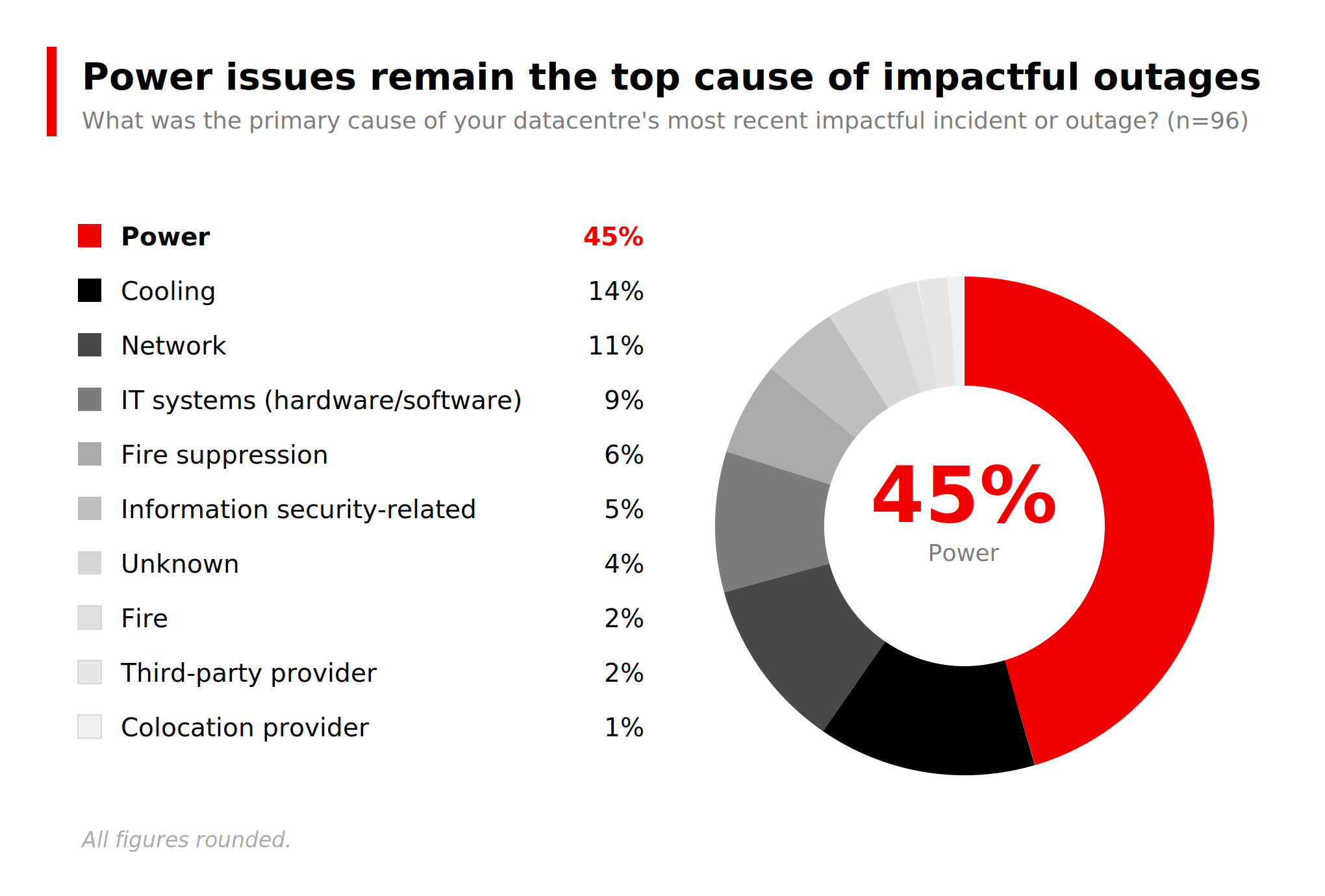
Figure 1: Impactful outage ratio (source: Uptime Institute Global Data Center Survey 2025)
A failure of a single component such as a transformer, a breaker, a control system or a communication line in the power generation part of an installation may lead to temporary downtime, data loss and service unavailability, all of which result in additional costs and potential penalties. The actual cost of a single datacentre outage may range from tens of thousands up to hundreds of thousands of USD, introducing significant risk to business continuity.
No matter the site complexity, uninterrupted inter-controller communication is always necessary for sharing essential information between individual control units to ensure seamless operation of any site. Streaming data such as actual active and reactive power or breaker states between controllers is a crucial part of any control system in installations where power sources run in parallel. Breaking the communication line, and thus the information flow, has an immediate impact on site operation and may lead to a site blackout in the worst-case scenario.
To avoid similar situations and reduce the impact of such failures, a redundant design of the inter-controller communication line and its topology comes into play. The topology, in other words how individual controllers are inter-connected, affects the robustness of a system against communication failure. The standard line topology shown in Figure 2(i) connects units in a daisy-chain style and may be extended with a backup redundant line. In such a scenario, failure of the primary communication line does not introduce any impact on the system, as data still flows over the backup line. It must be ensured that both the primary and backup lines lead through different paths to minimise the risk of both lines being damaged simultaneously by a single incident. However, the line topology is not immune to damage of the entire switchboard, for instance after a burnout, which may interrupt the communication channel and thus introduce a single point of failure in the system.
Another type of topology can raise system reliability to an even higher level and is often used in the most critical installations where no downtime is acceptable. The ring topology shown in the Figure 2(ii), as the name indicates, establishes the connection between individual control units in a ring structure. Every control system on site transmits information in both directions, ensuring each unit receives data from two different paths at the same time. In comparison to the line topology, the ring solution removes the single point of failure, as it maintains the communication stream even in the case of a switchboard failure or communication line break. On the other hand, control systems often use the CAN protocol for inter-controller communication. The physical layer of CAN requires a 120 Ohm termination resistor at each end of the CAN bus to ensure seamless communication. Thus, the ring connection cannot be realised using a standard CAN type of communication. CAN/fibre optics (FO) conversion, and vice versa, is therefore a necessary step for establishing a ring topology when relying on third-party converters. One must bear in mind that CAN/FO converters incorporate the overall logic of resending individual messages between control units, including proper bit timing and message prioritisation, and may become a bottleneck of such a system, leading to possible communication dropouts. Moreover, the number of commercial solutions available on the market is very limited.
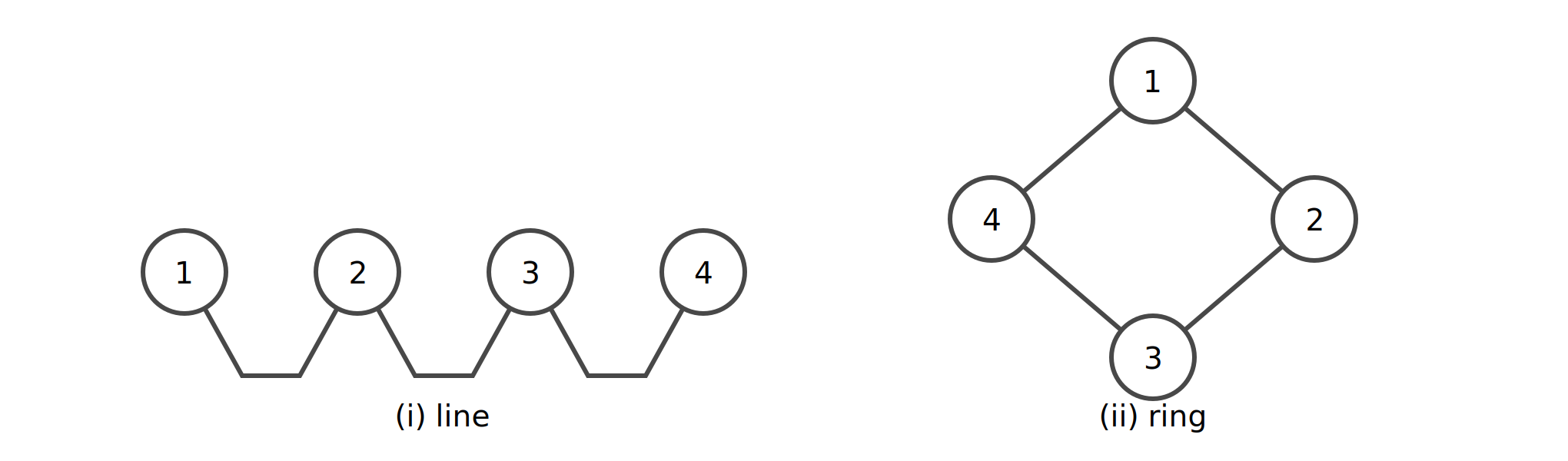
Figure 2: Inter-controller communication topologies. (i) line; (ii) ring.
With ComAp’s high-end control system solutions, InteliGen 1000 and InteliMains 1010, developed specifically for complex and demanding applications, you can design a fully redundant site that complies with the strictest requirements for mission-critical installations such as Tier IV datacentres.
Control units InteliGen 1000 and InteliMains 1010 support redundancy for essential inter-controller communication in line topology for both CAN and CAN FD protocols. Additionally, ComAp has also developed and introduced its own solution also for the most demanding ring infrastructures, ensuring even more reliable operation. Ring redundancy is built on inter-controller communication over Ethernet, enabled by the CM-EICC module, avoiding the issues noted above with CAN/FO conversion via third-party devices. If communication over FO is required, for instance due to ethernet distance limitations of up to 100 m, the ethernet/FO conversion may be realised using SFP modules, which are a well-established industrial standard. The ComAp solution utilises a verified and thoroughly tested ethernet switch that ensures seamless integration of control units and inter-controller communication in the ring topology, either over ethernet or FO, as illustrated in Figure 3. The overall logic for processing the data flow from inter-controller communication within a ring structure is controlled and managed by ComAp devices, while the switches simply route data in both directions. The ComAp solution for ring topology is very easy to install, without the need for extensive knowledge of network design to set up the communication infrastructure and switches correctly.
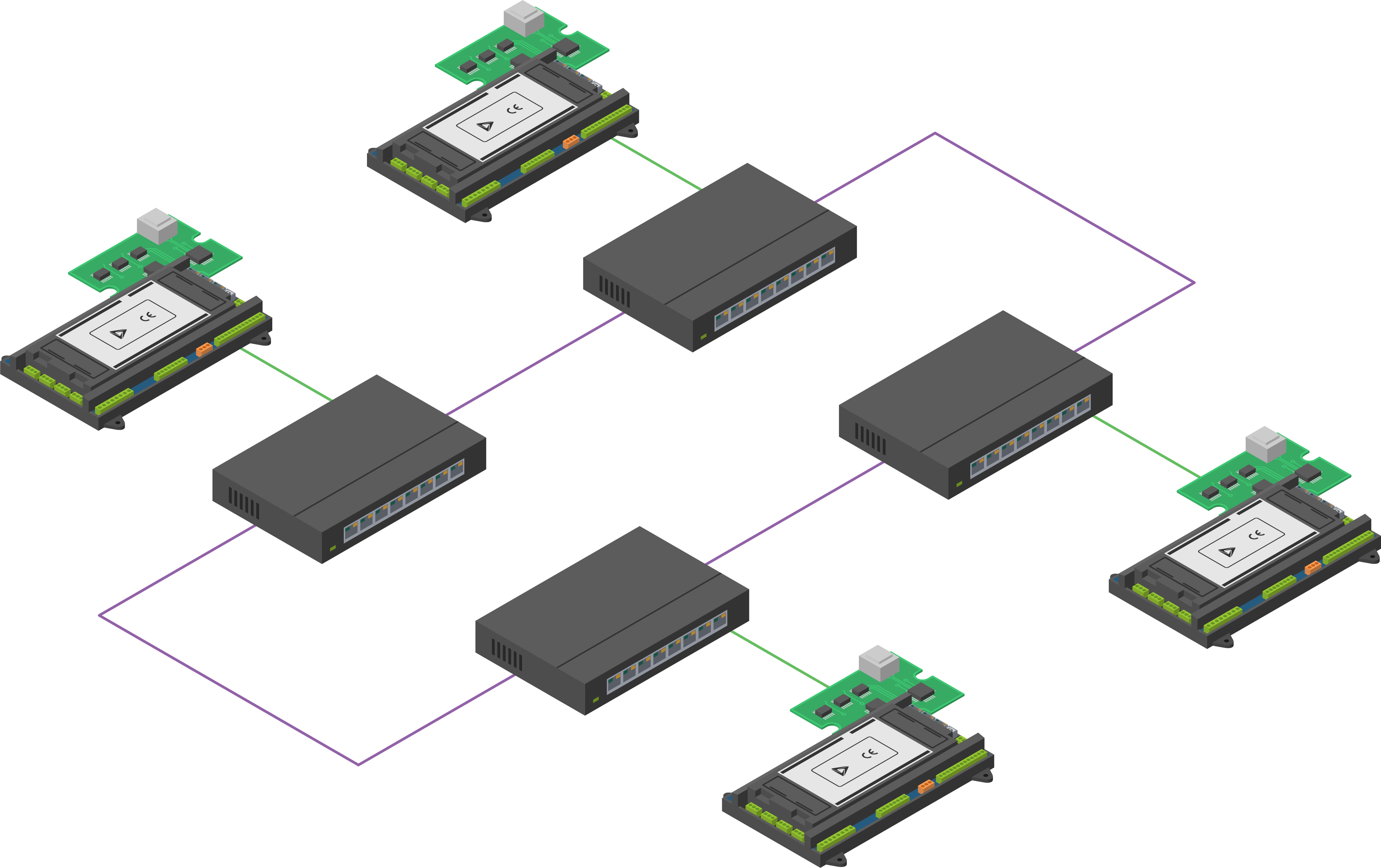
Figure 3: ComAp’s solution for ring topology
As the Uptime Institute data shows, power-related incidents remain the leading cause of datacentre outages, even as overall reliability improves. Designing out single points of failure in inter-controller communication is one of the most direct ways operators can continue that trend, and a control platform that supports both line and ring redundancy as standard makes that step considerably easier to take.
With over 30 years of experience in delivering smart control solutions and hundreds of projects for mission-critical applications such as datacentres, ComAp is ready to support you with any project, no matter the complexity, starting from initial discussions and consultancy through to site testing and final commissioning.


